


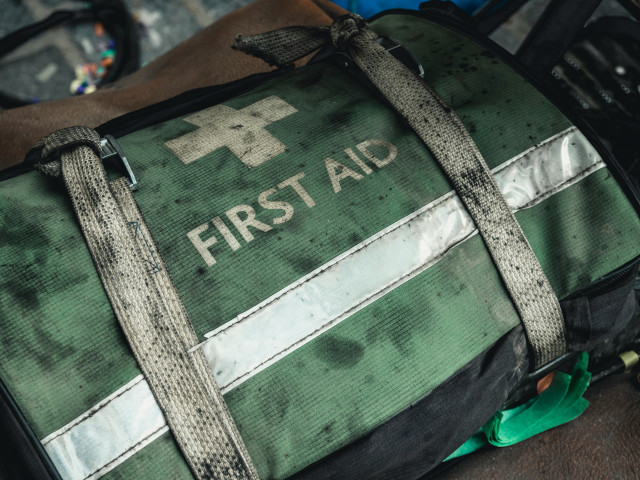
Recently, I had the misfortune of attending a fatal car crash, on the way back from - ironically - CPR training. I am a First Aid instructor and I was delivering a session at a semi rural workplace and as I left the property, at the end of the driveway I snapped 2 photos of the beauty of the location before getting in my car and starting the drive home - which lasted all of 2 mins.
Shortly after turning onto the highway I came across a horrific scene with debris everywhere, trucks and cars pulled over, a few people looking shell shocked on phones and then I spotted a car with front end damage and 2 people holding up a blanket. I knew this was where I needed to head to see if I could assist.
It is funny what you think of when the crap hits the fan. Most people would grab their phone out of instinct but I knew everyone had done that, instead I grabbed the resuscitation mask I had only just put away a few mins before.
As I approached the immediate scene, I announced myself loudly and clearly. "I am an Advanced First Aider/Instructor. Can I Help at all?" They turned to me, and one of the 2 holding the blanket said "No, they have passed"
Now I hope that got a gasp from you, because anyone who has attended First Aid training should know that it is NOT ON US to determine if someone has passed, it is on us to do the CPR when someone needs life preserving assistance.
The next thing I did was pop my head around the barrier to see who was running the first aid response. I spotted a man wearing a well known company First Aid Instructor training shirt, kneeling next to a prone person who was clearly needing CPR but he was not doing CPR (maybe he was 2 seconds earlier? But when I approached, he was not) I repeated myself loudly and clearly, "I am an advanced First Aider/instructor may I please help you" He looked at me, said NO, leaned forward and started compressions.
Due to what he was wearing - he was in charge and without doubt his guidance was being followed as the only expert on scene. (I was not wearing an identifying shirt I only had my words to use to communicate my own ability) At this stage, I thought perhaps the stress of the situation had gotten the better of him, so I leaned down and placed the resuscitation mask beside the person on the ground and directly in view of the now compressing first aid instructor. He shook his head and again said NO.
I could have tried harder to intervene but he was clearly in charge of the situation and I would have been up against two people who were ready to protect him. I felt I had no choice but to back away at that stage and find the next best place to assist which was what I ended up doing. I was then informed by a witness that the person had initially been responsive and that there was a pet unrestrained in the vehicle.
I was present the entire time busy with a reassurance role that I could and would have passed on at any stage in order to assist him do CPR with ventilations via the mask I had, until the ambulance arrived. He only had to ask one of his helpers to call out the lady who was less than 3m away and had identified as an advanced first aider/instructor.
He did not do that, instead he called off CPR when he had enough and wrapped the person in a blanket until the ambulance finally arrived at which time he informed the paramedics he had done 25 mins of NO ventilation compression only CPR.
Now you may wonder why I am here, writing an article about a First Aid situation where people do the best they can with what is in front of the, mistakes happen, things don't follow they way they should, people refuse help, but if you are an instructor wearing an identifying piece of uniform that puts you in charge then I would hope you would at least get the basics right, or have the ability to call yourself on the mistake and backtrack to accept the offered help.
Accepting help in a First Aid, especially in a CPR situation is crucial.
Only 2% of people who pass away in car crashes make it to the life saving place of organ donation.
We need to remember that if CPR is not successful, the story does Not end there unless our CPR ends there.
Elderly people can be organ and tissue donors. Anyone who has circulation maintained and does not survive the incident is a potential organ donor. As First Aiders, we do everything we can to sustain life, and that is not always about the life in front of us, sometimes it is about the life waiting on a long list.
If you are ever at the scene of an accident, please accept the help of those around you.
Hero's in First Aid are not the ones that do things all on their own, they are the ones that accept help and work in a team to get the best result.
I would have loved to help more that day, but instead I had to do the best I could with what was in front of me and for my own peace of mind, that has to be enough.